We've known now for quite some time that it was coming but for all you Droid X owners out there, the v4.5.621.MB810 update is now rolling out to the masses. As noted in the change log, this release covers a lot of bug fixes:
Prevents lockups or resets after the Over the Air (OTA) update.
OTA update notice screen displays the correct estimated update time.
Improved browser security with the Google Security Patch from Android 2.3.6.
Fixed issue where the device may power ON without user interaction.
Resolved possible device resets while playing music.
Adjusted camera settings will be saved, even after the device is powered down.
Reduced Out of Memory errors.
WAV files can be played from Visual Voice Mail.
Device is enabled with the Wireless Alerting System.
Improved stability of Music Player reduces resets.
Shortcuts to applications remain on the device even after applications are moved to the SD card.
Improved connectivity with 3G Mobile Hotspot data connectivity.
Addressed error that replicated thumbnails in message threads.
Corrected errors where Yahoo! mail notifications were not displayed properly.
Reduced duplicate message errors.
Improved ability to access and receive Gmail when the Mobile Hotspot is turned on.
Sorted contact groups.
Device recognizes Multimedia ringtones after purchase.
Button background lighting turns off while in the desktop cradle.
It's not Ice Cream Sandwich sadly but it's a massive update either way. Go ahead and check for software updates, it should be there. If not, sit tight it will be along shortly and don't forget to drop by the Android Central Droid X forums and let us know how it's working out for you when you get it.
Not wanting to feel left out in the flurry of pre-MWC announcements, Motorola has revealed the availability of the international (GSM) RAZR in white in the UK, starting at Phones4U next Thursday, Mar. 1. As you might've guessed, it's the same Motorola RAZR that's been available in the UK since late November, with a funky white trim. Phones4U appears to have scored brief timed exclusivity period with the white RAZR, so it's likely you'll need to pony up for a 1-2 year contract if you want one right away. But if you do manage to snag one between launch day and Mar. 25, you'll be entered into a draw to win tickets for the Snowbombing festival this April in Austria. Phones4U's pre-order page shows the white RAZR as available for free on a number of contracts with O2, Orange and Vodafone. The best deal seems to be a £21.50 per month package with O2, offering 200 minutes, 3000 texts and 500MB, though Orange has triple the minutes and double the data allowance for £28.50 per month.
A few hours ago we brought you news about an update in the works for the Motorola Droid X, and now Verizon has posted the change log to tell us just what the update entails. It's not a version bump, but nobody really expected Ice Cream Sandwich (officially) for this one. On the plus side, the Droid X should be at the top of it's game with all the tweaks included in build 4.5.621.MB810
Prevents lockups or resets after the Over the Air (OTA) update.
OTA update notice screen displays the correct estimated update time.
Improved browser security with the Google Security Patch from Android 2.3.6.
Fixed issue where the device may power ON without user interaction.
Resolved possible device resets while playing music.
Adjusted camera settings will be saved, even after the device is powered down.
Reduced Out of Memory errors.
WAV files can be played from Visual Voice Mail.
Device is enabled with the Wireless Alerting System.
Improved stability of Music Player reduces resets.
Shortcuts to applications remain on the device even after applications are moved to the SD card.
Improved connectivity with 3G Mobile Hotspot data connectivity.
Addressed error that replicated thumbnails in message threads.
Corrected errors where Yahoo! mail notifications were not displayed properly.
Reduced duplicate message errors.
Improved ability to access and receive Gmail when the Mobile Hotspot is turned on.
Sorted contact groups.
Device recognizes Multimedia ringtones after purchase.
Button background lighting turns off while in the desktop cradle.
See? We weren't kidding! Instructions and help with the update are available as well, but everything is still marked as "Coming Soon" for now. When it goes live, we'll tell ya.
Motorola has added the PHOTON 4G, ATRIX 4G, ATRIX 2, and ELECTRIFY smartphones to the list of devices that it will upgrade to Android 4.0 Ice Cream Sandwich this year. These new smartphones join the XOOM, DROID BIONIC, DROID RAZR, DROID RAZR MAXX, and DROID 4, which have already been announced to receive Android 4.0 upgrades. The upgrades for the ATRIX 4G, ATRIX 2, and PHOTON 4G are expected to arrive in Q3 of this year, while the others are still in the planning stages without an announced release plan.
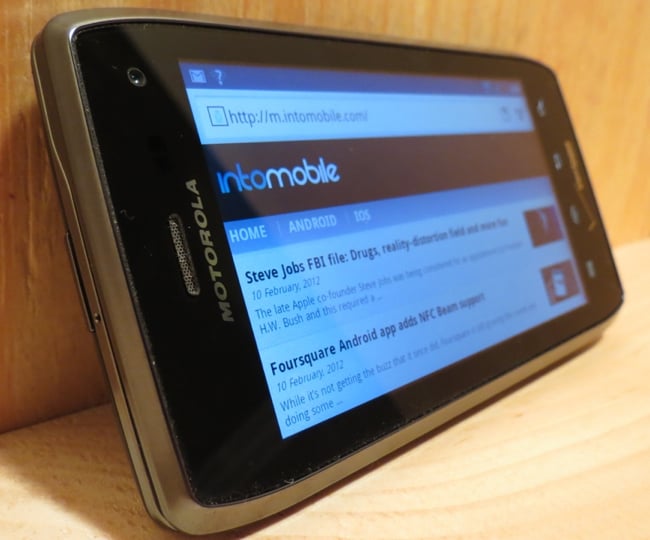
Like the crack epidemic of the 1980s, RIM’s BlackBerry handsets created a generation of telephone typists addicted to phone-based correspondence. We quickly came to expect — nay, demand — instant responses to our e-mails, aided by the raised BlackBerry keyboards that soon became indispensable. And, hey, I’ll cop to it: I too became hooked on CrackBerry. Though we’ve since progressed to a new age, one of touchscreen-powered iPhones and Androids, our thumbs’ muscle memory still longs for keyboards. That’s where Motorola’s Droid models come in. When the first Droid was released in 2008, it was the perfect crossover phone for inductees leaving BlackBerries for a new platform. And with both physical keyboards and touch-based controls, Droids have been the go-to Android phones for remaining keyboard holdouts. The Droid 4 — which just landed on our doorstep this morning — carries on the Droid brand tradition by focusing on the keyboard as the phone’s most polished feature. The chassis is solid to the touch, with hard, steely lines and a gunmetal-colored plastic finish that’s in step with all previous Droid generations. Sheathed beneath the slide-out screen is the raised, five-row keyboard, edge-lit for night use and topped with a brushed finish, almost matte-like in feel. It’s easily Motorola’s finest keyboard construction effort. There are two sticking points, though — and one is literally a sticking point. First, the sliding mechanism is a bit too sticky, making it something of a pain to quickly push out the keyboard. And when closed, the sides of the phone are flush with one another, making it even more difficult to slide out the keyboard in a flash. Second, because of the keyboard’s elongated horizontal layout, I found my thumbs had to stretch farther than what I’m used to during thumb typing. Make no mistake, the keyboard itself is wonderfully constructed, and the raised keys provide for great tactile response. I’m just not a fan of the sheer width of the keyboard itself; it’s a complete refutation of the historically vertical BlackBerry layout. It sounds like a small quibble, but can result in glaring typos.
Motorola, however, is also keeping in mind the type of audience that loves keyboards the most: suits. The software that comes with the Droid 4 screams “corporate productivity,” ostensibly giving you more ways to get stuff done no matter where you are. MotoCast apps, for instance, let you access files on your home computer remotely from the phone — sort of like a Dropbox or a virtualization client for your smartphone. Yes, Google’s enterprise application suite could supplant the need for Motorola’s solution. But you can use MotoCast to access photos and music, as well as documents with all kinds of file extensions, so if you don’t want your whole life in Google’s cloud, you don’t have to put it there. In the same vein, the phone supports GoToMeeting access, wireless printing and Quickoffice document editing. It’s all an invitation to always bring your office work with you, wherever you may be. Hmmm. I guess that’s a good thing. In most every spec category, the phone is up to snuff with the best competing Android phones. It sports the requisite dual-core processor, a 1.2GHz chip backed by 1GB of RAM. Whipping through menu screens was speedy as hell, especially with the pared-down version of whatever Android skin is resting atop the original OS (it once was Motoblur, but now it’s nowhere near as intrusive). And as is par for the Droid course, this latest phone packs a 4G LTE radio hooked straight into Verizon’s network. Out of all the carriers, we’ve had the best luck with Verizon’s UL/DL speeds in the Bay Area, so its speediness isn’t surprising. And if you’re streaming music from your PC to your phone over your data connection, you’re going to want something fast. So, RIM loyalists, will the Droid 4 take the place of your BlackBerry? As RIM’s device release schedule slows, aimless keyboard cowboys in search of new hardware will start to look elsewhere. Now it’s on Motorola to deliver.
The European Commission gave the Google-Motorola Mobility deal the green light yesterday, and not long after, it looks like the US Department of Justice has decided to follow suit as well. According to the Department of Justice; “After a thorough review of the proposed transactions, the Antitrust Division has determined that each acquisition is unlikely to substantially lessen competition and has closed these three investigations”.
This brings Google one step closer to owning Motorola Mobility – now all the company needs is the approval of China, Israel and Taiwan to proceed. So there’s still a chance that this purchase isn’t going to fall through. In addition to approving the Google-Motorola purchase, the Department of Justice also approved the recent joint purchase of patents from Nortel by Google, Apple, Microsoft, RIM and others.
No word on when Google will get the approval of the other three nations, but we’ll be sure to keep you posted when it does.
Just like Hollywood celebrities who attempt to hide their estranged lovers from the public eye, the tech world works very much the same way. Sometimes for OEM’s, despite their best efforts, the truth eventually comes out. Especially when it’s a secret as juicy as this one. What you’re looking at in the above image is Motorola and Intel’s lovechild, to be later officially unveiled at Mobile World Congress in just a few short weeks. The device will have the eyes of it’s father — Motorola’s Motoblur — mixed with soul of Google’s Ice Cream Sandwich and powered by Intel’s Medfield processor (seen in a few devices at this year’s CES). Whether we’ll see a few more surprise partnerships from Intel at Mobile World Congress in a just a few short weeks is anyone’s guess. Either way, we’re officially hyped for MWC and I have to say, I’m a little jealous of our fellow Phandroid staffers who will be attending this year. I honestly can’t wait to see what other surprises emerge. How you guys liking the thought of Motorola getting into bed with Intel? Does it change any of your opinions on making a Motorola device a future purchase? [Pocketnow]
Can you believe the Motorola DROID is over three-years old? Since its introduction, we have seen four versions of the handset. Each one has been improvement over the previous model and the Droid 4 is no exception.
The Droid 4 is the first to rock 4G LTE and the first with a laser-etched, 5-row keyboard. Under the hood, the handset sings along with a 1.2 GHz dual-core processor, 1 GB of RAM, and 16 GB of internal storage. There’s also an 8-megapixel, rear, HD camera, a front-facing camera for video chat and a 4-inch qHD display.
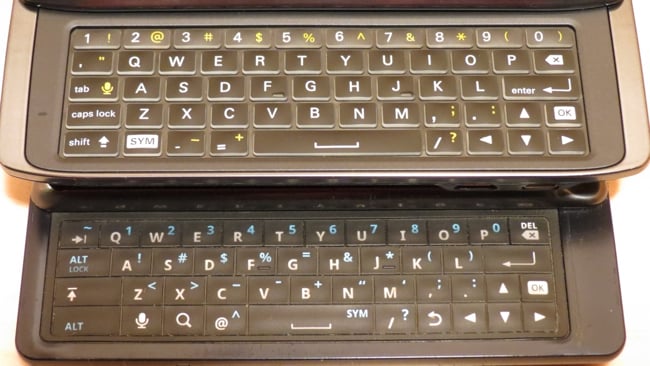
If you think of the Droid 4 as a Razr with a keyboard, you’ll get a good idea of what that handset is like. The Droid 4 sheds the boxy look of earlier Droids and adopts a spiffy, round-edged style. The Droid 4 also has an excellent-slide out QWERTY keyboard that makes typing out a tweet an absolute dream. You can see the bigger and better keyboard of the Droid 4 next to the Droid 2 in the image to the left.
The handset has a solid feel and is weighted perfectly for one hand usage. It also has a textured backing that keeps the phone from slipping through your fingers. The Droid wont win the title as the thinnest Android handset on the Market as it’s about as thick as the Droid 3. That’s the tradeoff if you want a dedicated keyboard, though. If you fancy yourself a smartphone photographer, you’ll be happy to learn the Droid 4 has an 8-megapixel rear shooter that takes decent-quality pictures.
On the software side of things, the Droid 4 is similar to the Razr which is terrific if you like the look and feel of Motorola’s latest Android implementation. The Droid 4 also has MotoCast, a remote media app, and SmartAction, an app that lets you create time-saving shortcuts. On the enterprise side, it supports government-grade encryption and includes a Citrix client for remote desktop access. The Droid 4 ships with Android 2.3.5, but it’s slated to get Ice Cream Sandwich in the upcoming months.
The question you all want to know, though, is should I buy the Droid 4. And the answer is “it depends.” If you are married to the idea of a QWERTY keyboard, then don’t hesitate to get the Droid 4. You’ll be happy with its snappy performance and the keyboard is one of the best we have seen on a non-BlackBerry handset. If you like a thin phone and don’t mind a virtual keyboard, then you may be better off with a Razr or even a Razr Maxx. The Maxx is a bit thicker than the Razr, but it has exceptional battery life even on 4G LTE.
If you want more details on the Droid 4, you can check out our earlier hands-on video below. You can also check back next week when we will have a full review.
Waiting for that Motorola ATRIX update to Ice Cream Sandwich, or holding out hope that your RAZR will be bumped up sooner than expected? Think again. According to Christy Wyatt, a senior vice president of Motorola’s Enterprise Business Unit, the blame is on Google. More specifically, the blame is on Google allowing unmitigated variation in its Android hardware lines. Wyatt says, “When Google does a release of the software … they do a version of the software for whatever phone they just shipped. The rest of the ecosystem doesn’t see it until you see it. Hardware is by far the long pole in the tent, with multiple chipsets and multiple radio bands for multiple countries. It’s a big machine to churn.” This means that the open sourced code available to manufacturers for each major Android release is based on the hardware they used in their latest Nexus device. For the Nexus One, this was Qualcomm’s Snapdragon processor; for the Nexus S it was Samsung’s Hummingbird; for the Galaxy Nexus it is Texas Instruments’ OMAP chipset. But even once the manufacturers successfully port the code over — ensuring hardware-level things like WiFi and video playback work as expected — there’s the alteration of custom skins to suit the new code. After that, the finished code is sent to the carriers for further review, and more tweaks. Wyatt claims that Motorola does this faster than anyone else: “More than once we’ve come out as the fastest to get to market with an upgrade.” But Motorola also uses multiple CPU variations in their devices: in just the past year they’re incorporated chips from Nvidia and Texas Instruments. They also accept that users want their updates unfettered by “bloat,” but they see features like Smart Actions and high-grade Enterprise support as differentiators in the crowded Android market. Whether the release of Android 4.0 Ice Cream Sandwich will speed up this process at all remains to be seen. Motorola is in the process of being engulfed by Google, so there’s a chance they may have first dibs at the new code. We don’t care, though: we just want our updates, and we want them now.
In a letter sent by Google to the president of the IEEE in an effort to convince him that Google's proposed purchase of Motorola would not cause any issues with patent licensing, the company indirectly confirmed the 2.25 percent royalty fee that Apple claims Motorola asks of its patent licensees. Google also said that the 2.25 percent of per unit sales fee would continue to be the maximum that it would demand from licensees when it completes the purchase of Motorola and absorbs its patent portfolio.
Apple initially took issue with 2.25 percent figure that Motorola asks from those that wish to license its patents, as it said that it was outside the realm of fair and non-discriminatory (FRAND) licensing terms. Indeed, when you do the math, the 2.25 percent fee amounts to $15 to $19 of what the retail cost of the iPhone 4S is - a pretty significant sum for a single patent license. Apple argues that if Motorola is able to demand that much for its FRAND patents, there is nothing stopping other companies from doing the same and bringing the telecommunications device industry to a grinding halt.
Google has promised that it will also honor Motorola's existing policy of negotiating "good faith" terms with business partners, and that it will not litigate against those who are willing to license its patents.
"Transparency and consistency in licensing practices are important with respect to standard essential patents, and the IEEE and its rules play a critical role in promoting those goals," said Google Deputy General Counsel Allen Lo, who penned the letter. "I am confident that Google's acquisition of MMI will not disturb those goals or otherwise adversely affect the IEEE, its members, or the implementers or consumers of its standards
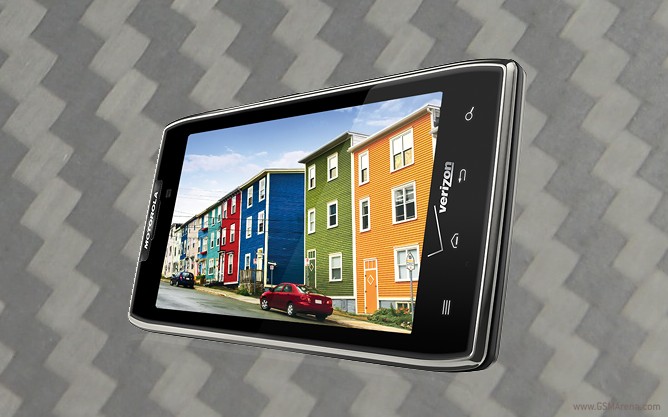
The Motorola Droid RAZR MAXX looks so familiar, you can easily mistake it for its slimmer brother from certain angles. Aside its massive built-in battery and a change in the internal memory capacity, the newcomer in Verizon’s LTE lineup is identical to the Droid RAZR, which broke cover in November last year.
Quite frankly, I never thought that battery capacity will be the star feature in a high end Android smartphone, but, given my experience with a number of top notch devices from the past year, it makes perfect sense. After all, I witnessed several Android top dogs with massive spec sheets display battery performance, which puts their daily usability in question, thus forcing me to walk around with a charger in my pocket. The Droid RAZR MAXX is clearly aimed at this painful issue.
As you know, the subject of this feature is a Verizon Wireless exclusive, LTE/CDMA device, which is why you won’t find it in the usual review section of GSMArena.com. The RAZR MAXX however, is easily among the most significant devices to launch in quite a while, thanks to its 3300 mAh battery on board and the massive shift in usability which it represents. So go ahead and enjoy this short version of our trademark reviews. As always, we’ll to get things going by taking a look at the handset’s key features.
4.3″ Super AMOLED display with qHD (540 x 960 pixels) resolution; 256 ppi pixel density
1GB RAM; 8GB built-in storage; 16GB microSD card included in the retail package
8MP autofocus camera with LED flash, 1080p video recording, 1.3MP front-facing unit
LTE network connectivity
3300 mAh battery with the best performance in class
Android 2.3.6 Gingerbread with Motorola’s proprietary UI; ICS update planned
Superb build quality with top of the line materials
The list get completed with the usual full connectivity set and Motorola’s exclusive software tricks. It is easy to notice that the battery is the biggest highlight above – we’ve seen the rest of the specifications in the Droid RAZR before.
Below are some of the features of the Motorola Droid RAZR MAXX, which we found to be… less likable.
Main disadvantages
No dedicated camera button
The battery is not user replaceable
The AMOLED screen features the older PenTile technology
Absurd amount of Verizon proprietary apps preinstalled
Motorola have threaded carefully with the Droid RAZR MAXX in order not to alienate the users, who bought the original Droid RAZR. While the newer model looks clearly like the better option from the two, the owners of the older incarnation will still have bragging rights as it is thinner and more elegant. It also comes with several color options.Retail package, design and build quality
The Motorola Droid RAZR MAXX comes in a compact, square-ish box. Inside, you will find a charger and several booklets. The 16GB microSD card is already inserted in the device.
Motorola Droid RAZR MAXX’s retail package
Given the phone’s battery prowess and serious multimedia capabilities, it would have been great if a pair of headphones was part of the retail bundle. Unfortunately, you will have to get one on your own in this case.
Design wise, the Droid RAZR MAXX is completely identical with the regular Droid RAZR. The same hexagonal shape is present, along with the same design patterns from the older model. Like I mentioned above, you can only tell the RAZR MAXX apart if you take a look at the device’s sides.
Build quality is also superb. The RAZR MAXX is put together from the same blend of Kevlar, Corning Gorilla Glass, and metal as its predecessor. I guess, only a user of the likes of Vertu or Mobiado might find something to frown about the build quality here.
The Motorola Droid RAZR MAXX’s measures are 130.7 x 68.9 x 8.9mm. This is only a 2mm gain in thickness over the regular Droid RAZR – more than acceptable, given the massive battery stuffed inside the smartphone. The handset’s weight is 145 grams – also quite commendable given its hardware. The 4.3″ qHD screen of the handset looks good, has great outdoor visibility, and, like all Super AMOLEDs, great contrast. The only minor grievance I have here is the PenTile nature of the unit. A Samsung Galaxy S II display for example, looks sharper, despite its lower resolution.
The 3300 mAh battery is the Droid RAZR MAXX’s greatest highlight. The smartphone achieved a total rating of 61h in our traditional battery test – a result which simply blew all competition out of the water.
You can find out the full breakdown of the device’s battery test here.
Handling the Droid RAZR MAXX is a real pleasure. The materials used in its making certainly help here. The same can be said about the extra 2mm in the smartphone’s waistline. It is now much less prone to drops. The much talked about camera hump on the back of the original is almost leveled out too.
Handling the Droid RAZR MAXX feels really nice
Unsurprisingly, the hardware of the RAZR MAXX didn’t disappoint, while its battery is downright amazing. It is now time for a closer look at the software of the device.
User interfaceAt its launch a couple of weeks ago, the Motorola Droid RAZR MAXX featured Android 2.3.5 Gingerbread out of the box. You can see it in action below.
Right before we were about to publish this feature, the handset received an OTA update to Android 2.3.6. While not revolutionary, it brought some welcome changes to the RAZR MAXX. They include several changed icons, including an updated device settings interface, to go with the usual performance tweaks.
Some of the changes, brought by Android 2.3.6
Since this is a short version of our usual reviews, I am not going to dig deeply into the software of the RAZR MAXX. Dressed in Motorola’s own UI, it is no different than the software of the global version of the RAZR, which we’ve covered extensively, save for the obscene amount of preloaded bloatware from Verizon on board. The latter has questionable functionality and cannot be removed out of the box.
The Verizon apps are so many, that they require a separate group in the launcher
Motorola is hardly to blame here, as the preloaded apps are subject to negotiation with Verizon Wireless. An option to remove them however, would have been fantastic.
A mixed bag of benchmarks
While the benchmark results of the Motorola Droid RAZR MAXX are certainly not eye popping, I would not qualify them as lowly either. The droid did well in some of the tests, and placed itself in the middle of the pack in others. Below you will find some of the results.
Antutu • Quadrant • Pi • Vellamo • Linpack
It is well known by now that benchmark results often have little in common with the real life experience, which a device offers. The Droid RAZR MAXX is yet another example. To put it simply – the device feels extremely fast and responsive. You will be really hard pressed to find even the slightest presence of lag, regardless of what task you throw the RAZR MAXX’s way.A really nice camera
The camera of the Motorola Droid RAZR MAXX is an 8MP autofocus unit with LED flash – right in line with the top offerings from the competitors. The interface is simple and intuitive. You can start the camera straight from the lock screen with a swiping gesture. I was also pleasantly surprised by the speed with which it captured photos.
The camera interface holds no surprises
The pictures which the Droid RAZR MAXX took came out great. They have great contrast, nice metering and dynamic range for a phone camera shots, along with top-of-the-line resolved detail and pleasant colors. Check out a few of samples below.
The camcorder of the RAZR MAXX can capture full HD videos at 30fps. Its interface is no different from the still camera one.
The camcorder interface
Video quality is really nice with plenty of detail and good colors. On the negative side, there’s no continuous auto focus, the camera focuses before the start of recording. Also, the automatic exposure does its job quite noticeably since the changes in exposure are anything but smooth. Below you will find a couple of video samples from Droid RAZR MAXX’s camera.
In 1080p mode the bitrate is about 15Mbps, the audio is stereo, encoded at about 128Kbps. Videos are recorded in MP4 format and a minute of video turns up a filesize of about 110MB.In 720p mode the bitrate is about 10Mbps, the audio is stereo, encoded, again, at about 128Kbps. Videos are recorded in MP4 format and a minute of video turns up a filesize of about 60MB.
Connectivity
Just like its predecessor, the Droid RAZR MAXX offers you more connectivity options than you can possibly need. Along with the usual Wi-Fi, Bluetooth, etc., the RAZR MAXX can connect to Motorola’s lapdocks, and transform itself into a seriously productive notebook.
The most important connectivity feature however (and the one you will end up using the most), is Verizon’s speedy LTE network. The wireless carrier was the first to employ LTE in the United States, so you will benefit from the best developed 4G network in the country.
In my experience with the device in NYC, I had full coverage everywhere, along with great network speeds.
Final Words
Motorola Droid RAZR MAXX does everything a high-end Android smartphone should do. Except, it actually has the battery to keep going and last you more than a day. The sole presence of that 3300 mAh battery on board should be enough to entice customers aplenty.
You will be hard pressed to find an alternative to the RAZR MAXX. Perhaps a competitor with an aftermarket extended battery? This could work, so long as you are comfortable with the fact that your phone will end up being a serious eyesore. The RAZR MAXX however, does not compromise on its looks or ergonomics. It is therefore, one of the easiest phones to recommend in a long, long time.