Showing posts with label Apple. Show all posts

Wednesday, February 22, 2012

The Beatles Release 24 Songs As iPhone Ringtones


A few weekends ago, I had some friends over, and we all got drunk and played Beatles Rock Band for a fun couple of hours. It was great. There really is something for everyone in the Beatles’ music catalogue.
One particularly funny moment came as I was singing “I Am The Walrus.” John Lennon has always claimed that the song is a blistering parody of caterwauling crooner Bob Dylan’s nonsense lyrics, but a friend of mine made an utterly bizarre case that the song is, instead, a subversive anthem in support of polysexual sodomy… an interesting interpretation, to say the least.
The key to the interpretation, he argued, is the chorus line. “Ooompah oompah! Stick it in your jumper. Everyone has one,” my friend quoted, his eyes bulging meaningfully. I found the whole exchange so funny that I immediately made myself an iPhone ringtone of the appropriate section of the song.
On a tangentially related note, The Fab Four has just released their first ever batch of iTunes ringtones. “I Am The Walrus” isn’t there, making my ringtone unique and signaling a conspiracy, but there are a ton of good songs available. Full list below.

All of the following songs from The Beatles’ compilation album 1 can now be purchased as ringtones for your iPhone through iTunes for $1.29 each.
• “Love Me Do”
• “From Me to You”
• “She Loves You”
• “I Want to Hold Your Hand”
• “Can’t Buy Me Love”
• “A Hard Day’s Night”
• “I Feel Fine”
• “Eight Days a Week”
• “Ticket to Ride”
• “Help!”
• “Yesterday”
• “Day Tripper”
• “We Can Work It Out”
• “Paperback Writer”
• “Yellow Submarine”
• “Eleanor Rigby”
• “Penny Lane”
• “All You Need Is Love”
• “Hello, Goodbye”
• “Lady Madonna”
• “Hey Jude”
• “Get Back”
• “The Ballad of John and Yoko”
• “Something”
• “Come Together”
• “Let It Be”
• “The Long and Winding Road”
You can read more about the ringtones here.


Tuesday, February 21, 2012

Leaked photos show subtle taper, slightly thicker iPad 3 case design


MIC Gadget claims to have seen and handled the shell for the iPad 3. The part was supposedly given to them by one of their “most reliable sources.” The shots provided by the blog show a case with the familiar side volume rocker, bottom charging port, and rear-camera of the iPad 2. Some shots suggest the iPad 3 casing has the same overall same shape and size as the iPad 2, but with a slightly different taper.
The iPad 3 may also be slightly thicker than the iPad 2, but that perception depends on the angle of the photo as a side-by-side profile shows the two cases to be almost identical. MIC Gadget also claims the iPad 3 has a slightly larger camera hole. This subtle difference is difficult to see from the leaked photos, but it does fit in with the rumor that the next generation tablet will sport an 8-megapixel camera.
Apple’s big tablet event is rumored for March 7th, so we will have to wait for another week or so to get all the official details on the iPad 3. Until then, we can speculate on the rumors which suggest the iPad 3 may have LTE, a retina display and a faster quad-core A6 processor. A recent rumor fromWeiPhone dampens our enthusiasm as it suggests the processor in the iPad may be a derivative of the A5, and not the quad-core A6 everyone is drooling over. As with any rumor, take it with a healthy dose of skepticism.
[Via MIC Gadget]


Monday, February 20, 2012

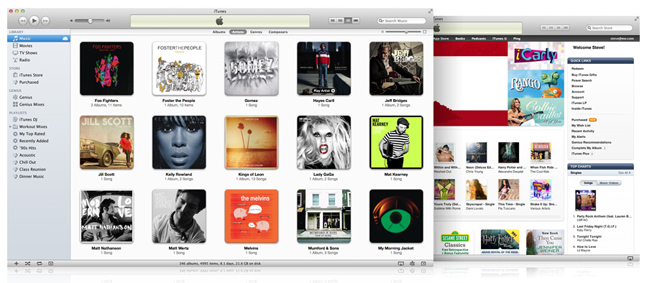
Apple may launch revamped iTunes Store, App Store later this year


Apple may be working on an overhaul of its iTunes Store and App Store, according to 9to5Mac. Due to growing competition from music streaming services like Spotify and the growing popularity of Amazon’s online music store, the redesign of the iTunes Store is considered “a top priority for Apple.” The Cupertino-based company is looking to simplify the service and deliver a more user-friendly interface than the one afforded by its current design. The redesign will reportedly simplify content discovery, and it will “make the iTunes Store a much more engaging experience.” The revamped stores are reportedly scheduled to launch later this year.

How To Supercharge Siri On Your iPhone 4S [Jailbreak]


If you’ve jailbroken your iPhone 4S, you have access to some great tweaks for adding functionality to Apple’s digital assistant, Siri. You can turn Siri into your personal translator, launch apps and toggle system settings, tweet, and and even change the look of the Siri UI.
We’ve collected the best tweaks in Cydia to help you supercharge Siri on your jailbroken iPhone 4S.

AssistantExtensions

AssistantExtensions is perhaps the ultimate jailbreak tweak for enhancing Siri on the iPhone 4S. With this incredible tweak you can use your voice to compose tweets, open all your of apps, search YouTube, and more. The best part is that AssistantExtension allows for developer plugins, so you can keep adding more features as new plugins are created. Did we mention that it’s all free?

MyAssistant

Many of MyAssistant’s features overlap with AssistantExtensions, but there are a few differences worth noting. You can create custom voice commands for settings toggles and even make your own custom conversations. You can also use photos from your device’s Camera Roll to customize Siri’s background. There’s some added customization for opening third-party apps as well. Grab it in Cydia for $1.

Hands-Free Control

This $3 tweak takes Siri to a whole other level. Instead of having to double tap the Home button, you never have to touch your iPhone to use the digital assistant. With a custom voice command, Siri will initiate itself from across the room. You could, for instance, set an alarm with Siri from bed without ever having to get up and grab your iPhone. Because Hands-Free Control is always running in the background, you may notice a slight drain in battery life, but nothing too detrimental.

Lingual

With Lingual, Siri becomes your personal translator. This incredible AssistantExtensions plugin will take a phrase you give Siri and translate it into another language almost instantly. There’s support for over 30 languages, including Spanish, German, French, Chinese, Russian and Hebrew. Lingual could very easily be a tourist’s best friend, and it’s available for free now in Cydia.

SiriLoveLyrics

Have Siri show you lyrics for your favorite tune. Just say “show text” or “show lyrics” while a song is playing in your Music app. Not bad for $1.

SiriLaunch

Because a double tap of the Home button is too difficult, the free SiriLaunch tweak adds a nifty little mic icon to the bottom left of your Notification Center.

TweetLine

TweetLine is a free plugin for AssistantExtensions that loads your Twitter timeline inside Siri’s interface. To trigger TweetLine in Siri, simply say the word “timeline.” The last 5 tweets from your timeline are displayed in plain text, but you can’t open links or specific profiles. It’s all very basic, but kind of neat if you have a quick second to kill and you want to see your most recent tweets.

TinyAssistant

TinyAssistant lets you resize the bottom Siri window to your liking. You can hide the “What can I help you with?” help dialog. Saying “help” into Siri will bring it back. Get it in Cydia for free.

Neurotech Siri

This is by far the greatest theme for Siri in Cydia. It’s like Siri meets sci-fi. Lots of the default interfaces in Siri have been skinned to match the theme, and you’ll notice how well done it is as you use it more. It’ll cost you $1 in Cydia and it does require Winterboard.

Siri Mic Colors

Purple Siri is soo boring. Why not change it up a bit? Once installed for free in Cydia, this simple package spices up your iPhone’s digital assistant with some rainbow flair.

iOS 5.1 Will Finally Bring Rich Text To Notes App [Rumor]

Apple finally brought the rich text format to its Mail app in iOS 5, but the Cupertino company is yet to introduce it to an app that I think needs it just as much: Notes. According to the screenshot above, however, it’s coming in iOS 5.1.
There are several features that have been left out of the iOS 5.1 developers betas, such as the new lock screen camera slider and Japanese support within Siri that we discovered last week. And it seems rich text formatting for the Notes app is another thing we can add to that list.
iPhone Hellas, which published the screenshot above, claims Apple’s next iOS update will finally bring bulleted lists, links, underlined text, new fonts, and font colors to the Notes app.
And there’s never been a better time, with rich text formatting part of the new Notes app for Mac that will make its debut with OS X Mountain Lion this summer.
Its migration to the Mac, as well as its new features, could suggest Apple has big plans for the Notes app. What has essentially been a very basic text editor since it made its debut on the first iPhone could turn out to become a real rival to services like Evernote in future, though admittedly there’s a long way to go just yet.
The iOS 5.1 update is expected to go public during Apple’s iPad 3 unveiling next month.
[via iMore]


Apple’s iPad Ban in China


A lawyer representing Proview International on Monday announced that the Intermediate People’s Court in Huizhou, a city in southern China, ruled on Friday that distributors should stop selling iPads in China, Associated Press reports. Proview has claimed ownership of the “iPad” name in China and it says Apple is violating its trademark. “We bought Proview’s worldwide rights to the iPad trademark in 10 different countries several years ago. Proview refuses to honor their agreement with Apple in China and a Hong Kong court has sided with Apple in this matter,” Apple spokeswoman Carolyn Wu said earlier in response to the lawsuits. Proview is looking to prevent Apple from importing or exporting the popular tablet in China and may sue the Cupertino-based company for as much as $2 billion in the United States. At least 45 iPads had been pulled from store shelves in various Chinese cities last week, however Apple’s tablets were still being sold at numerous retail locations across the country.

via-BGR

Saturday, February 18, 2012

HTC patent infringement claim against Apple dismissed by ITC

Back in July when Monday Night Patent Infringement was kicking off, HTC purchased a company called S3 for $300 million. The Taiwan based companywanted control over some patents owned by the company. Although not a terribly large company, S3 was responsible for graphics on computers, mobile devices and gaming consoles. Back in November, the ITC ruled that Apple had not violated any of the patents that HTC had acquired from S3. HTC decided to appeal the initial ruling. Unfortunately for the manufacturer, on Friday the ITCdismissed the appeal and although there are options, going 0 for 2 in court is usually a sign that you need to cut your losses.

The battle between the two companies started in March 2010 when Apple filed a suit against HTC with the ITC. HTC retaliated and the ITC eventually found no violation on Apple's part. In October 211, an ALJ made an initial ruling that Apple did not violate 4 HTC patents and the latter withdrew a complaint on a 5th patent. HTC asked for an appeal by the 6 member ITC to review the ruling. In December, the ITC agreed, but only for one of HTC's patents. The ruling Friday ends the filings and investigations on that one patent.

S3 had its own infringement case against Apple, possibly motivated by Apple's actions against HTC. At a time when it looked like S3 might win the case, HTC made the decision to buy the company and take over the patents. In November, the ITC ruled in favor of Apple. According to FOSS Patents, with only 5% of smartphone patents ruled as being violated by the ITC, companies are turning to the German courts, especially the Mannheim Regional Court and the Munich I Regional Court, for relief.

In December, Apple won an import ban against HTC devices that infringed on the '647 patent relating to "data tapping" or the tapping on phone numbers to call someone back. HTC worked around this by removing the offending technology and said it is rarely used. FOSS Patents sees Apple looking to broaden the scope of the ruling by getting a ruling that another patent had been violated by appealing to the Federal Circuit. Meanwhile, for the rest of 2012, we probably will not see any final rulings in the U.S. on Apple's claims against HTC since all of the former's Federal lawsuits against HTC have been stayed by the United States District Court for the District of Delaware. A preliminary ruling from the ITC is due in November on Apple's second complaint against HTC. Nothing might come up until next year in Germany where Apple has two suits filed against HTC for four patents, two in Munich and two in Mannheim.

Last summer, HTC filed a suit against Apple, claiming that the latter illegally infringed upon 9 patents Google gave to HTC for the express reason to sue Apple. Of course, it will be up to the court to determine if these 9 patents offer a stronger case against Apple than the one that was tossed on Friday.


source: FOSSPatents


CloudOn brings Office to UK iPad users


After a rocky start, CloudOn is now opening its free application, which allows limited use of Microsoft’s Office suite on an iPad, to UK users.

The application works in synchronization with the online file sharing service Dropbox, and allows users to view and edit Word documents and PowerPoint presentations, as well as to manipulate pivot tables in Excel. The files have to be stored in a Dropbox account that CloudOn can access, only Office 2010 apps are supported, and the app is useless without internet access.


How will Microsoft react?

US users have been able to use CloudOn since the start of this year, although the service was initially suspended shortly after launch because the company said it had “sold out”. Since CloudOn runs the Office software in emulation on its servers, this could mean that they’d reached the limits of scaling for support.

The British launch was scheduled for an earlier release, but was then pulled at the last minute before being launched this Friday. CloudOn said this was down to Apple taking its time accepting the application, but declined to give any more details.

While the ability to handle Microsoft Office documents on an iPad will be welcome to many, Redmond itself might have other ideas. In a call to analysts this week, Microsoft CFO Peter Klein ducked questions about Redmond porting Office to the iPad, although he went on in great detail about how Office 15 would work on Windows tablets.

Microsoft declined to comment on the CloudOn launch. ®

Friday, February 17, 2012

Apple Teaches You How To Make Your First App Store App With New Guide


Are you interested in making iPhone and iPad apps for the App Store? If you’d like to get your feet wet, or at least see what’s involved, Apple has posted a new walkthrough called “Start Developing iOS Apps Today.”
The simple guide takes you through the initial setup and teaches you about basic tools, frameworks, Apple’s design policies, and more. The goal is that you will be able to create an app from scratch and have it ready to debut in the App Store.
While not the most technical explanation of iOS development, Apple has done a great job of consolidating information into one easy destination for curious eyes. Here’s the official rundown:
Creating iOS apps is fun and rewarding, and if you’re a new developer you might be wondering where to begin. This road map provides the perfect starting point for iOS app development. On your Mac computer, you can create iOS apps that run on iPad, iPhone, and iPod touch. Follow this road map to learn where to get the tools you need, understand the major concepts and best practices, and see where to find more information.
As you proceed through the road map, you will use Xcode and the iOS SDK, Apple’s tools for app development. You will learn the basics of programming with Objective-C, the language that powers all iOS apps and frameworks, and will explore the Cocoa Touch frameworks. You will create a simple iOS app and learn how to test it on a device. Finally, you will learn how to submit an app to the App Store.
The document is broken up into 13 pages. There’s only a couple paragraphs and illustrations per section, but Apple has included helpful links to more detailed resources from the iOS Developer Library, like how to write Objective-C code.
Anyone can access Apple’s new guide from this link. To actually publish an app in the App Store, you must purchase an official developer account from Apple for $99/year.


Google and other advertisers used ‘a special code’ to bypass Safari privacy restrictions

Google and other leading advertising companies have been bypassing the privacy settings of millions of unknowing Safari users, reports the Wall Street Journal. Using “a special code,” the companies were able to bypass the browser’s privacy restrictions and install cookies on a user’s computer, even when such actions were supposed to be blocked. Companies such as Google use cookies to track browsing habits across websites that it places advertisements on. Apple’s Safari Web browser blocks these third-party cookies by default, only allowing them on a website that a user directly interacts with. Read on for more.
The Journal’s research found that this “special code” was present in 22 of the top 100 websites when browsing from a computer, and 23 sites when using the iPhone’s browser. The publication notes that “once the coding was activated, it could enable Google tracking across the vast majority of websites.”
The Mountain View-based company has maintained its innocence, claiming its advertising cookies do not collect personal information. “The Journal mischaracterizes what happened and why. We used known Safari functionality to provide features that signed-in Google users had enabled. It’s important to stress that these advertising cookies do not collect personal information,” responded a Google representative.
Vibrant Media, Media Innovation Group and PointRoll all employed a similar code for tracking. Out of all the companies, Google has the largest market share, delivering Internet ads that were viewed at least once by 93% of all U.S. Web users in December. Apple reached out to The Journal and informed the publication that the company is “working to put a stop” to codes that bypass Safari’s privacy settings.

Google privacy settings, hides cookies in Safari for iPhone


Google is caught up in what has the potential to be a rather large privacy scandal. The company has acknowledged using a hack in ads served by its Google Ads/DoubleClick service that allowed it to bypass a privacy setting in the iPhone and iPad's Safari browser. This hack allowed Google to place a cookie, a small bit of tracking code, in Safari when it normally wouldn't have been allowed.


The issue is that the hack allowed Google's ad servers, as a "third party site," to set the cookie. It is normal behavior for sites that a user visits directly to set cookies. We do it here on MobileBurn.com. It allows sites to keep you logged in, to use your preferred settings, or just to ensure that traffic statistics are accurate. But Google was setting the cookie without the user visiting Google's website directly.

Google's intent in doing this was not to track users for advertising purposes, though. Rather it was a work-around that would allow Google+ users to press the +1 button that appears on ads served by its network. There's nothing particularly nefarious about what Google was trying to do here, and the cookies it placed in Safari were set to expire after no more than 24 hours.

When Google detected that a user was logged into Google+, it set a cookie that would allow the user to hit the ad's +1 button. When the user was not an active Google+ user, it also created the cookie - but left it blank. Google said that this was done to effectively annonymize the data - making all users look alike.

This technical two-step had a side effect that Google admits to not having anticipated.

That side effect is that advertisements that use Google's ad network now had a foot in the door. This is because once a site has a cookie set on a browser, it is generally allowed to set additional cookies - no matter which site is being visited when they are set. This allows for features like Facebook's 'like' button to operate on non-Facebook sites. But now Google advertisements were setting their own cookies that would have been prohibited before, and they could be set with their own expiration dates that could keep this door open indefinitely.

Google's Rachel Whetstone gave The Wall Street Journal the following statement about this side-effect:

"We didn't anticipate that this would happen, and we have now started removing these advertising cookies from Safari browsers. It's important to stress that, just as on other browsers, these advertising cookies do not collect personal information."

The Journal reported that other advertising networks were using the same Safari hack to set cookies, and that ads containing the hack were appearing on major websites across the country. Including its own.

An Apple spokesperson told the Journal that it was looking to put a stop to this security hole in its Safari browser.

Apple CEO: No pressure from Microsoft, PC industry is chasing MacBook Air

Apple deviated from its standard closed-door approach to unveiling new software earlier this week and gave a number of media outlets early access to an upcoming version of its OS X operating system for Macs. Apple’s OS X 10.8 Mountain Lion will launch this summer, featuring a wide range of enhancements that will see Apple’s desktop platform look and behave more like its mobile platform. Executives from the Cupertino, California-based technology giant even met with reporters personally to demonstrate the new software, perhaps in an effort to help foster the same type of enthusiasm for OS X that iOS enjoys. During one such meeting with The Wall Street Journal, Apple CEO Tim Cook shed some light on the PC industry from Apple’s point of view. Read on for more.
From the dawn of the personal computing era, Apple and Microsoft have been huge platform rivals. The companies traded blows over the years and drove innovation that caused the PC industry to grow at a remarkable pace. According to Apple’s new chief executive, however, those days are over.
“I don’t really think anything Microsoft does puts pressure on Apple,” Cook told The Wall Street Journal, raising the question of whether or not the world’s most valuable company even views Microsoft as a rival anymore.
Rivals put constant pressure on each other, driving one another to raise the bar and innovate. With Apple’s core business having shifted to mobile and Microsoft just beginning to regain its footing in the mobile market, it makes sense that Apple’s attention has shifted elsewhere. And with dozens of patent complaints having been filed by Apple around the world against Google’s Android partners, it’s safe to say we know where Apple’s focus has shifted.
Cook wouldn’t say much about Apple’s future plans for its Mac PCs, but he did suggest that the rest of the industry is trailing behind Apple and struggling to catch up. In particular, the executive sees the MacBook Air as a huge accomplishment that the rest of the industry is now trying to duplicate. ”Now, you see the industry at large trying to copy it in some way, but they’ll find that it is not so easy,” the CEO told The Journal.

Thursday, February 16, 2012

Apple Brings Mountain Lion Features To Safari With 5.2 Developer Pre-Release

Apple has seeded a pre-release of Safari 5.2 to registered developers. Following the release of the OS X Mountain Lion developer preview this morning, a new beta of Safari has been made available with browser features from Apple’s upcoming desktop OS.
Namely, Safari 5.2 for OS X Lion introduces the unified, Google Chrome-like address/search bar. There are some other minor cosmetic changes that mirror the Safari version from the Mountain Lion developer preview.
Apple recently seeded Safari 5.1.4 to developers with bug fixes and minor improvements, and 5.2 is the next major update for existing users that will likely not be released until OS X Mountain Lion this summer.
Xcode 4.4 was also released today to help developers get their apps ready for Mountain Lion.


Wednesday, February 15, 2012

Wants Answers From Apple On Apps Stealing Address Book Contacts

A week ago, it was discovered that the popular social networking app Path uploads users entire address books to their servers. They’ve since apologized and nuked the data. But Path’s not the only ones doing this: other high profile companies like Twitter are also doing it. And Apple’s letting them.
Not so surprisingly, Congress isn’t liking what it’s hearing about the address book security issue. In fact, House Energy & Commerce Committee Chairman Henry Waxman and Commerce Manufacturing and Trade Subcommittee Chair G.K. Butterfield have written Apple a letter asking some hard questions about how Apple has allowed this to happen, and “whether Apple’s iOS app developer policies and practices may fall short when it comes to protecting the information of iPhone users and their contacts.”

Here’s the letter in full:
Mr. Tim Cook
Chief Executive Officer, Apple Inc.
1 Infinite Loop
Cupertino, CA 95014
Dear Mr. Cook:
Last week, independent iOS app developer Arun Thampi blogged about his discovery that the social networking app “Path” was accessing and collecting the contents of his iPhone address book without ever having asked for his consent.[1] The information taken without his permission – or that of the individual contacts who own that information – included full names, phone numbers, and email addresses.[2] Following media coverage of Mr. Thampi’s discovery, Path’s Co-Founder and CEO Dave Morin quickly apologized, promised to delete from Path’s servers all data it had taken from its users’ address books, and announced the release of a new version of Path that would prompt users to opt in to sharing their address book contacts.[3]
This incident raises questions about whether Apple’s iOS app developer policies and practices may fall short when it comes to protecting the information of iPhone users and their contacts.
The data management section of your iOS developer website states: “iOS has a comprehensive collection of tools and frameworks for storing, accessing, and sharing data. . . . iOS apps even have access to a device’s global data such as contacts in the Address Book, and photos in the Photo Library.”[4]The app store review guidelines section states: “We review every app on the App Store based on a set of technical, content, and design criteria. This review criteria is now available to you in the App Store Review Guidelines.”[5] This same section indicates that the guidelines are available only to registered members of the iOS Developer Program.[6] However, tech blogs following the Path controversy indicate that the iOS App Guidelines require apps to get a user’s permission before “transmit[ting] data about a user”.[7]
In spite of this guidance, claims have been made that “there’s a quiet understanding among many iOS app developers that it is acceptable to send a user’s entire address book, without their permission, to remote servers and then store it for future reference. It’s common practice, and many companies likely have your address book stored in their database.”[8] One blogger claims to have conducted a survey of developers of popular iOS apps and found that 13 of 15 had a “contacts database with millions of records” – with one claiming to have a database containing “Mark Zuckerberg’s cell phone number, Larry Ellison’s home phone number and Bill Gates’ cell phone number.”[9]
The fact that the previous version of Path was able to gain approval for distribution through the Apple iTunes Store despite taking the contents of users’ address books without their permission suggests that there could be some truth to these claims. To more fully understand and assess these claims, we are requesting that you respond to the following questions:
- Please describe all iOS App Guidelines that concern criteria related to the privacy and security of data that will be accessed or transmitted by an app.
- Please describe how you determine whether an app meets those criteria.
- What data do you consider to be “data about a user” that is subject to the requirement that the app obtain the user’s consent before it is transmitted?
- To the extent not addressed in the response to question 2, please describe how you determine whether an app will transmit “data about a user” and whether the consent requirement has been met.
- How many iOS apps in the U.S. iTunes Store transmit “data about a user”?
- Do you consider the contents of the address book to be “data about a user”?
- Do you consider the contents of the address book to be data of the contact? If not, please explain why not. Please explain how you protect the privacy and security interests of that contact in his or her information.
- How many iOS apps in the U.S. iTunes Store transmit information from the address book? How many of those ask for the user’s consent before transmitting their contacts’ information?
- You have built into your devices the ability to turn off in one place the transmission of location information entirely or on an app-by-app basis. Please explain why you have not done the same for address book information.
Please provide the information requested no later than February 29, 2012. If you have any questions regarding this request, you can contact Felipe Mendoza with the Energy and Commerce Committee Staff at 202-226-3400.
Sincerely,
Henry A. Waxman, Ranking Member
G.K. Butterfield, Ranking Member
Subcommittee on Commerce, Manufacturing, and Trade
Apple has until March 9th until they respond. My guess at this point is that by the time iOS 5.1 rolls around, Apple will require explicit user permission for an app to grab address book data. There’s no reason that shouldn’t already be the case, and this is just causing too much bad press for too many companies.

Apple reportedly disabling Siri


When the iPhone 4S and Siri were announced, there was a flurry of activity amongst hackers and developers who were curious to see if they could port Siri onto non-iPhone 4S devices. While they have managed to do that, the process involved is a rather long one as it involves a jailbroken iOS device and users are required to set up their own SiriProxy server. However it looks like the joy and novelty of using Siri on a non-iPhone 4S might be short lived as Apple appears to have taken steps to disable Siri on unauthorized devices.

There have been reports that users who have Siri installed on non-iPhone 4S devices who claims that it no longer works. Upon further investigation, it seems that the cause of this problem is a certain “SetActivationToken” property list file which disables attempts to communicate with Siri’s servers.

Not all is lost though as there are reports of non-iPhone 4S users claiming that simply deleting thecom.apple.assistant.plist file from the jailbroken iOS device’s var/mobile/Library/Preferences/ folder fixes the issue. It seems rather straightforward and simple, and while we don’t really have a chance to try that out ourselves, we’d love to hear from our readers who are experiencing such issues and if the solution worked for them.


App Development By the Numbers – Android Sputters While iOS Surges


Beyond the sheer number of devices sold, one of the biggest ways to Apple and Google try to position themselves as having the top mobile platform is by comparing the number of third-party apps available for users to download. Apple usually takes the number of apps available one step further when comparing iOS to Android by pointing out how many apps take advantage of the iPad’s tablet features such as screen size.
This is one of the reasons that an active and developer community is crucial a mobile platform’s success. Although Android entered the app race after Apple had begun to establish a successful developer community, the platform began to catch up quickly. All that seems to have changed over the past year, with a new report showing iOS developers are now creating three apps for every single new Android app.
The trend was identified by Flurry, a company that helps mobile developers integrate analytics and advertising into their apps. Flurry noted that at the beginning of 2011, the rates were much closer with two new Android apps for every three iOS apps. Peter Farago, vice president of marketing at Flurry noted that the company “saw a greater migration to iOS.”
That has longterm implications for both consumers and business users of third-party apps and some of the same trends causing developers to prefer iOS could easily apply to in-house app development at enterprise companies – particularly if you look at some of the trends that Businessweek identified based on the Flurry data and developer interviews, which include:
  • The simpler development process and toolkit for iOS
  • The variety of of Android devices including non-standard Android platforms like Amazon’s Kindle Fire
  • The single Apple-managed App Store versus as many as 90 Android storefronts, including Google’s Android Market
  • The differences in purchasing culture (iOS tends to offer more paid app success compared to Android where there is an expectation for apps to be free and developers to make money by in-app sales and ads)
For businesses developing apps, two of those trends – the ease of development and the limited variation between devices – certainly make iOS a much more attractive candidate. The inherently better security of iOS is also likely to sway corporate IT departments to prefer iOS as a platform for internal apps compared to Android.
It’s also worth noting that these four trends may be part of the reason that Android developers haven’t yet embraced tablet development in the same way that iOS developers have jumped on the iPad bandwagon.


Tuesday, February 14, 2012

Apple Flips Kill Switch On Non-iPhone 4S Siri Users

Jailbreakers have the ability to run a homegrown version of Siri on unsupported iOS devices, and it appears that Apple doesn’t like it. According to mixed reports, a large amount of unsupported Siri users are now unable to use Siri. Has Apple stepped up its game, or is this merely a routine update to the spunky digital assistant?
iDownloadBlog says that Apple has added a ”SetActivationToken” requirement for Siri to function properly. According to the report, Siri server users on Twitter are claiming that deleting the com.apple.assistant.plist file located in the jaibroken iOS device’s var/mobile/Library/Preferences/ folder fixes the issue.

Because the problem can be fixed so easy, it’s unclear as to whether this is a direct attack by Apple on non-4S Siri users. It could be a coincidence that this new token blocks unsupported access. To get Siri up and running on a non-4S device, jailbreakers must install Spire and set up their own SiriProxy server. The process isn’t for the faint of heart, and the number of unofficial Siri users can’t be too high. We’re hoping that Apple has bigger fish to fry, and that this added Siri token is something for the iPad 3.

New Mac Pro With Ivy Bridge Processor And NVIDIA Kepler GPU Coming Soon

It’s been so long since Apple refreshed the Mac Pro that a number of reports have speculated the machine is set to be killed off. But it’s still available from the Apple store, and according to a new report, it’s going nowhere. In fact, it’ll soon to get a refresh that will introduce Intel’s Ivy Bridge processor and the new Kepler GPU from NVIDIA.
According to sources for M.I.C. Gadget, overheating issues that Apple previously had with the desktop have now been resolved thanks to Intel’s new Ivy Bridge chip which is set to make its debut in April:
Well, we have some good news, Intel will be moving to its Ivy Bridge platform in April, and this will solve heating issues. How does it do that? Well, with its 22nm (extremely efficient) manufacturing process, it is very efficient in operation in comparison to the previous Sandy Bridge. More importantly, the old transistor types are gone, and replaced by “tri-gate” transistors. According to our sources, those transistors are 30%+ more efficient with heat dissipation.
Thanks to Apple’s partnership with Intel, the company has already received engineering samples of the new processors, according to sources, which boast 8 cores and 20MB of cache.
Additionally, the Mac Pro’s GPU will also be updated to NVIDIA’s new Kepler platform which is due out around the same time. Apple is said to have been “burned” by the Mac Pro’s existing ATI graphics, which are prone to flickering, overheating, and other failures.
… our sources within the company indicate that they have chosen to have Nvidia lead the charge so to speak on the graphics front. This is good for all our compatriots who want to use the special graphics engine in Adobe products, as it supports Nvidia only, or for those who wish to do CUDA based programs as well, again only supported by Nvidia.
M.I.C. Gadget reports that we should see the new Mac Pro near the end of the third quarter, when Apple has “ironed out all the bugs with the newly released hardware.”


What I know about the iPad 3


With Apple’s upcoming iPad 3 launch just a few weeks away, reports and rumors have been swirling. We exclusively reported some details on the tablet which The Wall Street Journal has basically confirmed, but here’s a round-up using what we know, what’s been rumored and reported, and what I’d wager the iPad 3 will feature when it launches early next month:
  • A Retina Display is a near-certainty. This display will offer double the resolution of the iPad and iPad 2, bringing the resolution of the screen to a whopping 2048 x 1536 pixels. This is better than the resolution you get from a 1080p Blu-ray disc, and almost as large as Apple’s 27-inch iMac display. Imagine the clarity of an iPhone 4S display three times as big, and you’ll get an idea of what to expect with the iPad 3′s screen. Images will look beautiful and text will look as crisp as if it were a magazine that you’re reading.
  • 4G LTE. The ability to use the iPad on 4G LTE networks would mark the first time Apple has manufactured a 4G device, and there’s a very solid chance that the new iPad will have 4G built-in. This will support AT&T and Verizon’s 4G LTE networks in the United States, and it’s possible it will support other 4G LTE deployments in other parts of the world depending on frequencies.
  • Better cameras. I’d expect a 3.2-megapixel autofocus camera for the rear camera at the bare minimum with a 5-megapixel unit possible, and Apple will also include a front-facing camera that supports HD FaceTime chats.
  • Wi-Fi and Cellular models. Apple will most likely offer two versions of the iPad just as the company does now — a Wi-Fi only and a Wi-Fi + cellular variant, though I’d wager that Apple will be able to combine the GSM and CDMA models into one, offering a truly global 4G + 3G + CDMA + GSM + Wi-Fi iPad 3.
  • Apple A6 quad-core processor. While the rumor mill has been going back and forth about whether Apple will include the company’s first quad-core processor for iOS in the iPad 3, I have to say that I expect Apple to do so. Since Apple is on a yearly product cycle, I’d bet that a quad-core processor is featured, setting the stage for an A6 quad-core chip in the iPhone 5 (clocked slightly lower than the iPad’s chip) later this fall.
  • A larger battery. It is expected that Apple is going to use a much larger battery in the iPad 3, but before you think that battery life is going to be increased by 50%, I’m assuming this is simply to compensate for a more power-hungry 4G LTE chip, faster processor and more powerful GPU to power that Retina Display. I expect comparable battery life to the iPad 2, though it’s certainly possible Apple could push it just a tad bit farther and make it better.
  • The outside hardware of the iPad 3 will most likely be identical to the iPad 2. In fact, the only change that’s likely to occur is that the case will be less than 1 millimeter thicker, not something that’ll will barely be noticeable.
  • iOS 5.1. This is a no-brainer, but iOS 5.1 will be introduced with the iPad 3 and be released for the iPhone and iPod touch as well.
  • Siri for iPad. I’d wager heavily that the iPad 3 will at least feature Siri’s text dictation, though it’s certainly possible Apple will bring the full Siri experience to the iPad.
The world’s most beautiful display on a mobile device, the fastest wireless connection in the world, an industry-leading custom quad-core processor and battery life that’s unmatched by the competition — among many other upgrades. Sounds good to me.

Monday, February 13, 2012

Apple iPad 3 to be announced on March 7th[romour]


According to sources who have been reliable in the past, Apple currently plans to hold theiriPad 3 announcement on Wednesday, March 7, 2012. Along with the 2048×1536 Retina display, the iPad 3 will feature a quad-core Apple A6 system-on-a-chip, and possibly 4G LTE networking.

The March 7 date fits with what AllThingsD reported last week, about the next iPad event being scheduled for the first week of March, and Wednesday is a traditional day for Apple to hold these types of events.

Whether Apple would simply improve and optimize the current dual-core ARM Cortex A9 processor found in the Apple A5 SoC, or go quad-core has been a lingering question, with9to5Mac finding code references to quad-core but The Verge hearing otherwise. However, it sounds like they’re going quad-core.

4G LTE networking has been another mystery surrounding the iPad 3, with a compatibleQualcomm chipset becoming available, but international LTE coverage is still slim, and in some cases a year or more away. It sounds like Apple has 4G LTE lined up for iPhone 5 this October, but we’re still not certain if the iPad 3 will get it earlier. Verizon is going to want iOS devices that go faster than 2-3mbps, of course, especially with AT&T offering HSPA 14.4, and potentially faster, models. Apple could release a 4G LTE variant model, targeted at Verizon, AT&T, Rogers, Bell, and other carriers that have rolled out enough support to see demand, or they could wait and debut it in the next iPhone instead. (No doubt Apple has already decided, it just isn’t clear to us which way they went for the iPad 3.)

Other rumors from iLounge have included better cameras, either a 5 or 8 megapixel rear camera and a FaceTime HD front camera. We haven’t received any information on these, though any camera Apple includes will have to fit into the thin iPad 3 casing. Likewise, they’re probably going to want to keep component costs down low enough to maintain their $499 entry level price tag. (Even if Apple decides to keep iPad 2 around, with a low end, low storage offering at $399.)

Again, these are rumors, and an extract of a lot of information we’re still trying to properly sort, but we’ll update when and as needed to clarify and correct. Either way, we’ll only know for certain when Apple executives take the stage next month to officially announce the iPad 3.